
This is a continuation of sunset photography at Dead Horse Point SP, Utah.
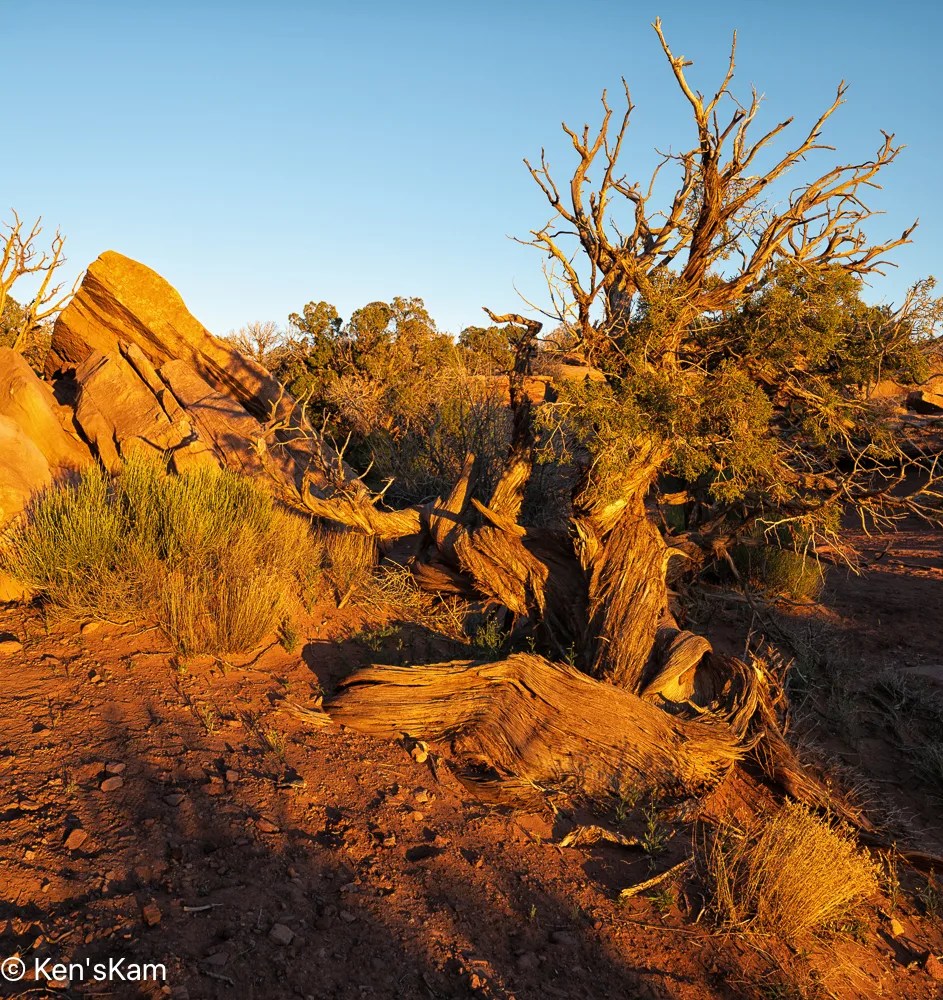
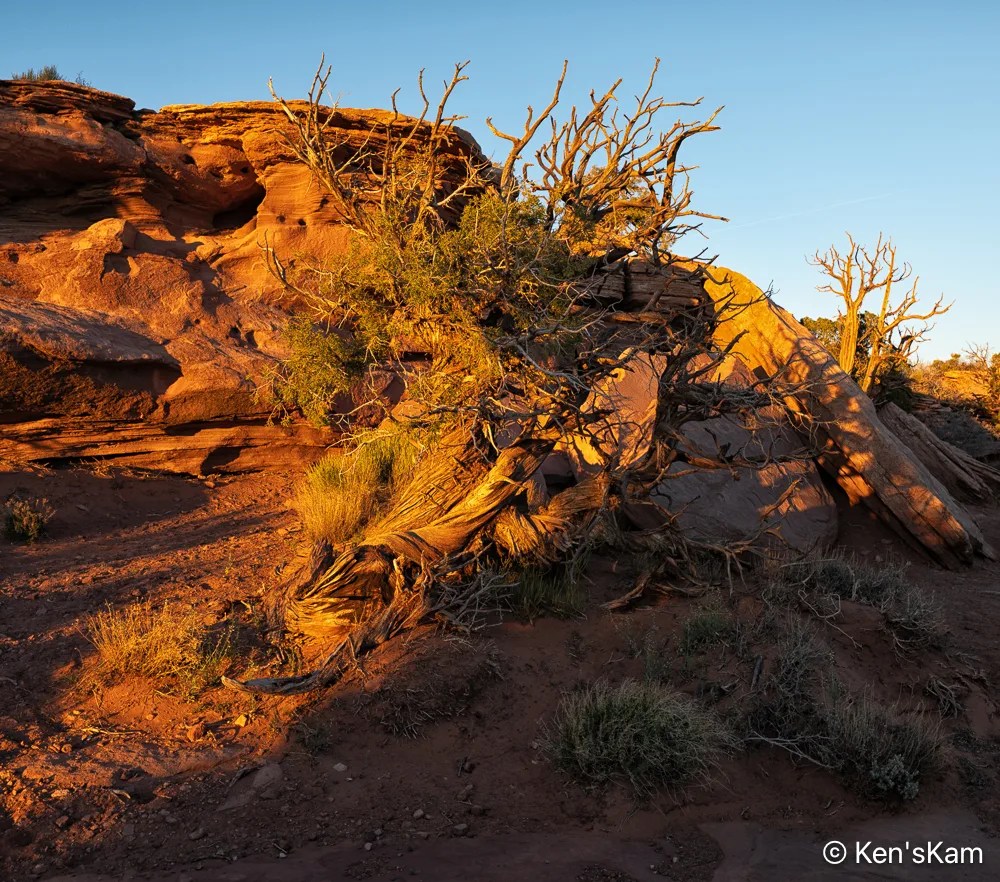
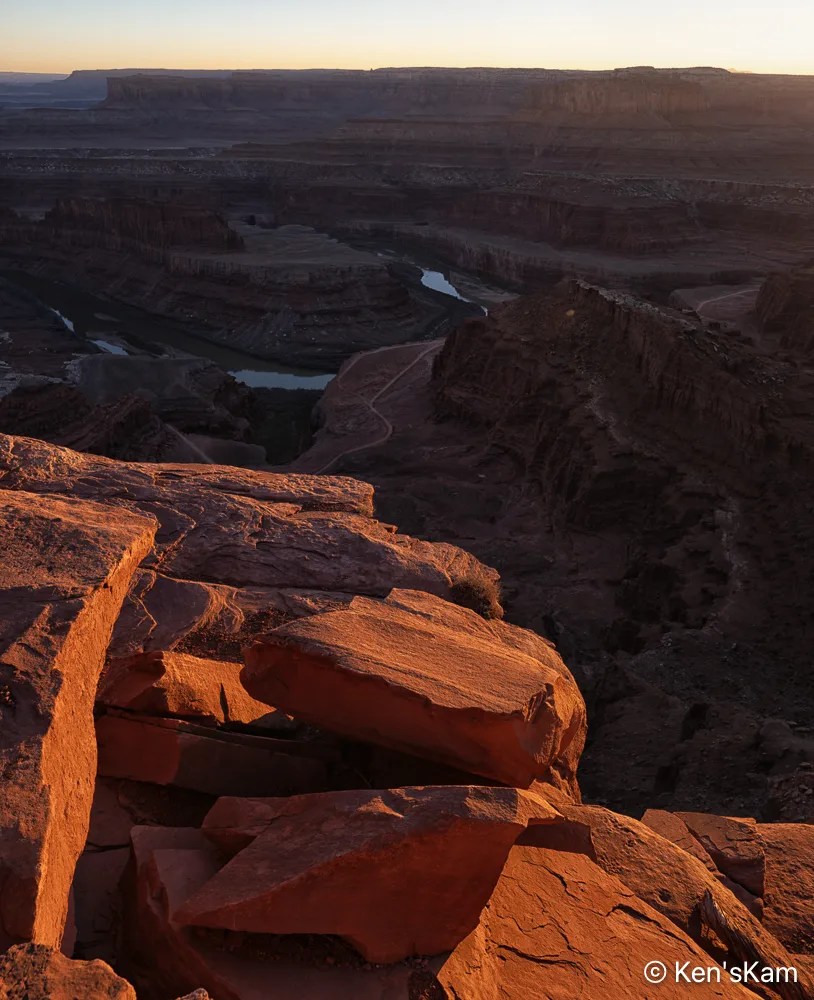
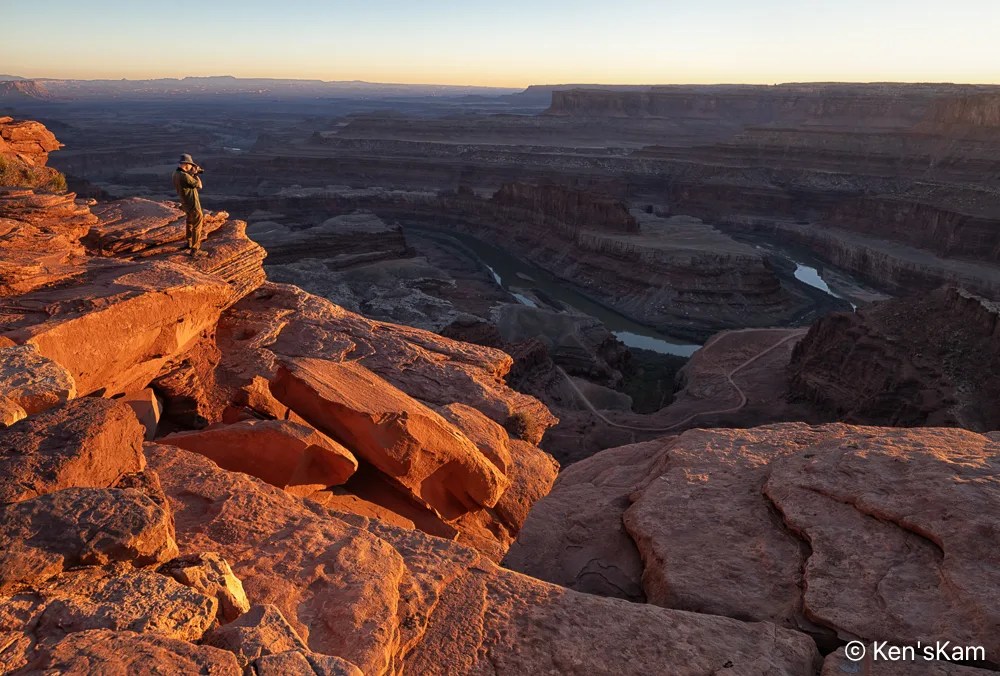
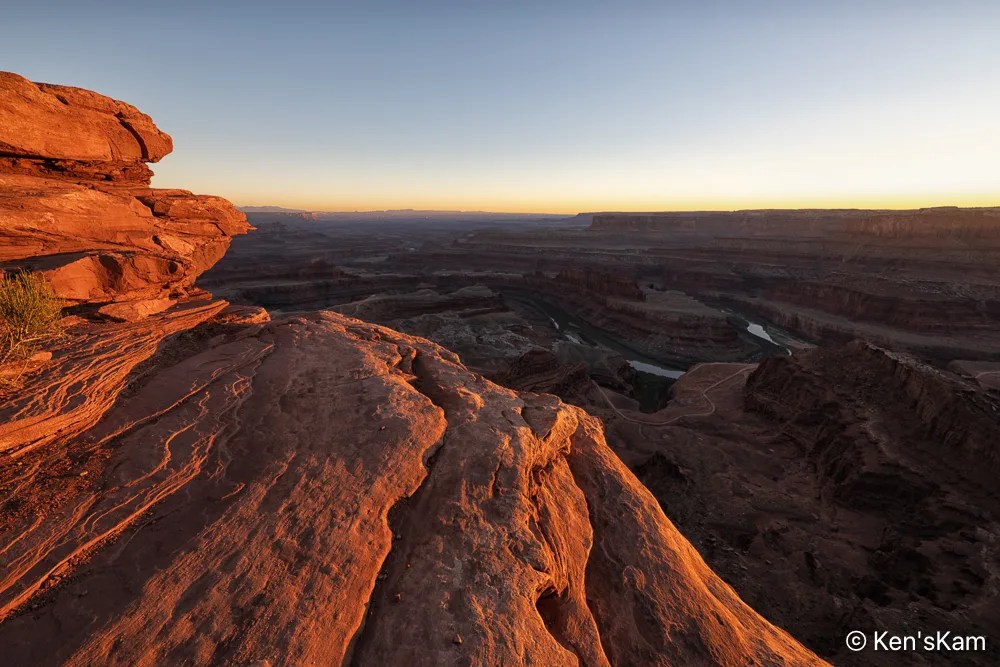
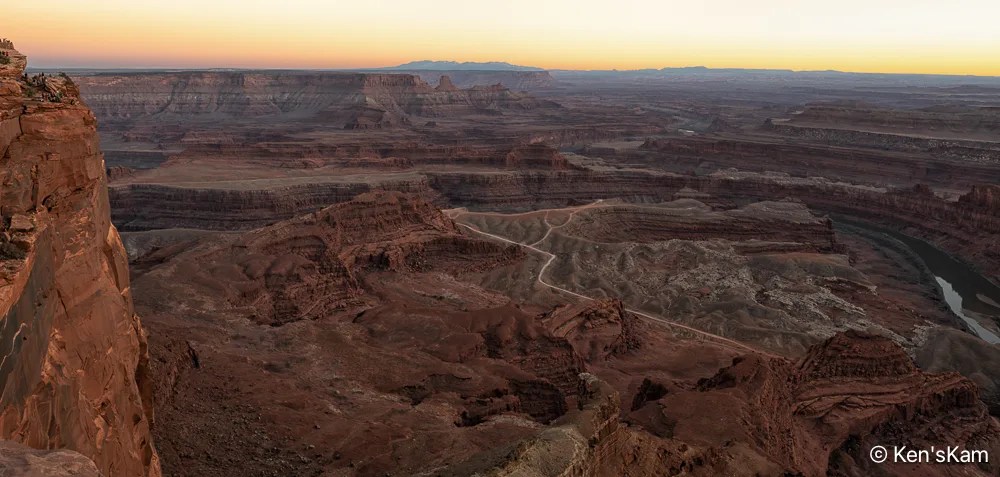
This concludes the photography series from Utah in March of 2026.
Thanks for following,
Ken
This is a continuation of sunset photography at Dead Horse Point SP, Utah.
This concludes the photography series from Utah in March of 2026.
Thanks for following,
Ken
Followers probably noted the winding road through the landscape as seen from Dead Horse Point in previously posted images. After shooting sunrise at Dead Horse Point, we traveled that road. This post contains a few of the photographys made along that road.

I think this road might be refered to by different names and I’ve mostly heard folks talk about this route as Shafer Trail, but my map shows this portion as Potash Road, to the best that I can decipher the map labels

This pond is a part of a potash production facility. Potash (potasium chloride) is disolved from underground rock with water pumped from the Colorado River and put into evaporation ponds. Blue dye is added to the water to increase solar energy absorption that heats the water speeding up the evaporation process. These ponds can be seen from the Dead Horse Point overlook and are in some of my photos made at that overlook.


I always stand in awe of the natural power of water, wind, weather and time to carve such amazing landscapes.

The road we traveled changes its name to Shafer Trail somewhere along the route, I think at the point where it enters Canyonland National Park. This photo was made at an overlook near where Shafer Trail exits onto a paved road near Canyonlands NP Visitors Center.

Late in the day, we returned to Dead Horse Point for sunset photography. Stay tuned for more,
Ken
I’ve fallen behind in my normal blog post schedule, being preoccupied with other summer time activities. I’ll try to get back to a more regular schedule.

I used this geological feature as a foreground for star photography. As usual, I’m slow at processing those night images, so the star photos will have to be in a later post.


Most of the golden hour light was gone by the time I made ‘Early Morning Light’, but I really like the light and shadows on the undulating foreground.
After shooting sunrise from our campsite, we explored more of the local area, driving a number of side roads into the desert.

These rock shapes remind me of crowns that might be worn by kings and queens.


‘Sand, Plants, and Hills’ is a paraphrase from the Eagles’ song ‘A Horse with No Name’.

As evening approached, we set up for more night sky photography.
Thanks for following,
Ken
There is an arch on a bluff just off of Buckhorn Draw Road, which we stopped to check out on our way back from Little Grand Canyon.

As we drove back along the route we had taken to get to Utah’s Little Grand Canyon, we stopped to check out a side road near a large campground, where we were considering staying; but as we explored the side road, we discovered more interesting scenery and plenty of open campsites at which to enjoy the scenery.

Look closely and my Sportsmobile can be spotted near the center of this image. If just glancing at the image, the Sportsmobile might be mistaken for a natural feature.

This zoomed in image shows the campsite location a bit better.

This pano, made from our campsite, is of geological features across the roadway.


We will shoot star photographs at this location. These images were taken not only to show the local scenery, but to select compositions for night sky foregrounds.
More local images and exploration images to follow,
Ken
An early rancher in this area left his name on much of the area and there is an old log cabin that he built alongside one of the easily traveled roadways that any vehicle can travel to, at least in good weather. However, just past the cabin that roadway becomes a “moderate” 4 wheel drive as rated by trail books, but has some intervals of what might be better be described as “difficult” 4 wheel drive sections, which we decided not to venture very far along.

This image makes is look as if there is a big rock feature on top of the cabin, but it is actually on a hillside behind the cabin.


Thanks for following and stay tuned for more Utah landscapes,
Ken
There is a hoodoo in Badlands National Park that is visible from the paved road through the park. Getting close to the hoodoo requires hiking down the steep slope from the roadway and a short hike.
I made numerous iPhone camera shots as I walked around the hoodoo to show how a hoodoo can look considerably different from different points of view.


I think these make my point about “Dancing Around an Object” to photograph it.
Thanks for following and stay tuned for more Badlands scouting photos,
Ken
After photographing wildflower scenes around my campsite, I left the campsite to travel into Badlands National Park to scout locations for golden hour photography. But first, I drove around a little in the large public land area, where I was camped to get a better feel for the area and scout other possible campsites, in case my prefered location was again taken or the site I occupied on my first night here was taken, when I returned in the evening.
There are numerous road trails through this area, which is popular with off-road vehicle riders, who create their own trails with their dirt bikes, 4 wheelers and other vehicles. I traveled into the area a bit, but did not take time to fully explore the area, after I was satisfied that it would be no problem to easily find numerous suitable places to overnight here.
I parked along one of the trails on my way out, hiked up to the top of one of the many hills in this area and captured this pano:

There is a gravel road that leads from the small town of Interior, SD into Badlands NP, which I take as a short cut into the park, rather than following the highway to a main entrance. There is a sign indicating when one is entering the park on this backroad, but no entry station. The sign does inform that a permit or fee is required to be in the park, so anyone in the park might be asked by a ranger to show proof of fee payment or other permit. I have a Senior Pass, one of the few benefits of old age, so I never worry about having to show proof that I can be in a National Park.

I stopped on this gravel backroad to shoot a few images of the Badland features in the distance that appear to “erupt” out of the flat land in the foreground.
It was a mostly heavily overcast day with periodic light rain. I stopped at a number of the overlooks to snap a few scouting photos with my iPhone. The dramatic clouds in the sky made for interesting photos and I probably should have taken more time to capture better quality images with my Nikon Z8 and wide angle Z14-24mm lens. The Z8 is sealed well, but keeping rain drops off of the big lens glass can be a problem and I wanted to be able to scurry about quickly, so I left the big camera and lens in my vehicle, while I scouted various locations for shooting later in the day.


With the heavy cloud cover, not much direct light fell upon the badlands features, but occasionally a little light broke through the clouds to highlight some of the rocks.


The shape of the mound of dry, cracked, gray earth in the foreground bears a similarity with the shape of the rain clouds in the sky, yet the dryness of that mound of clay contrasts with the wetness of the clouds.

Lush green vegetation in the low areas contrasts with the almost barren rock in the background.

A meandering stream runs through the low area at the base of the badlands features.
More Badlands images later,
Ken
P.S. These images are best viewed on a large screen.
This is the final installment of photography in the area of Southern Utah known as ‘White Rocks’.


‘Rocky Slope’ give an indication of the environment one must navigate to photograph in this area.

‘Leaving White Rocks 1’ was chosen for Flickr’s Explore page.

And that’s a wrap,
Ken
This is a continuation of multiple shoots in an area of Southern Utah known as ‘White Rocks’.

This first image on the Flickr Explore page.


To be continued,
Ken
We returned to the area refered to as White Rocks in Southern Utah for an early morning shoot. I switched from the Nikon D850 and 24-70mm lens to the Nikon Z8 and Nikon Z14-24mm for this shoot.


To be continued,
Ken