
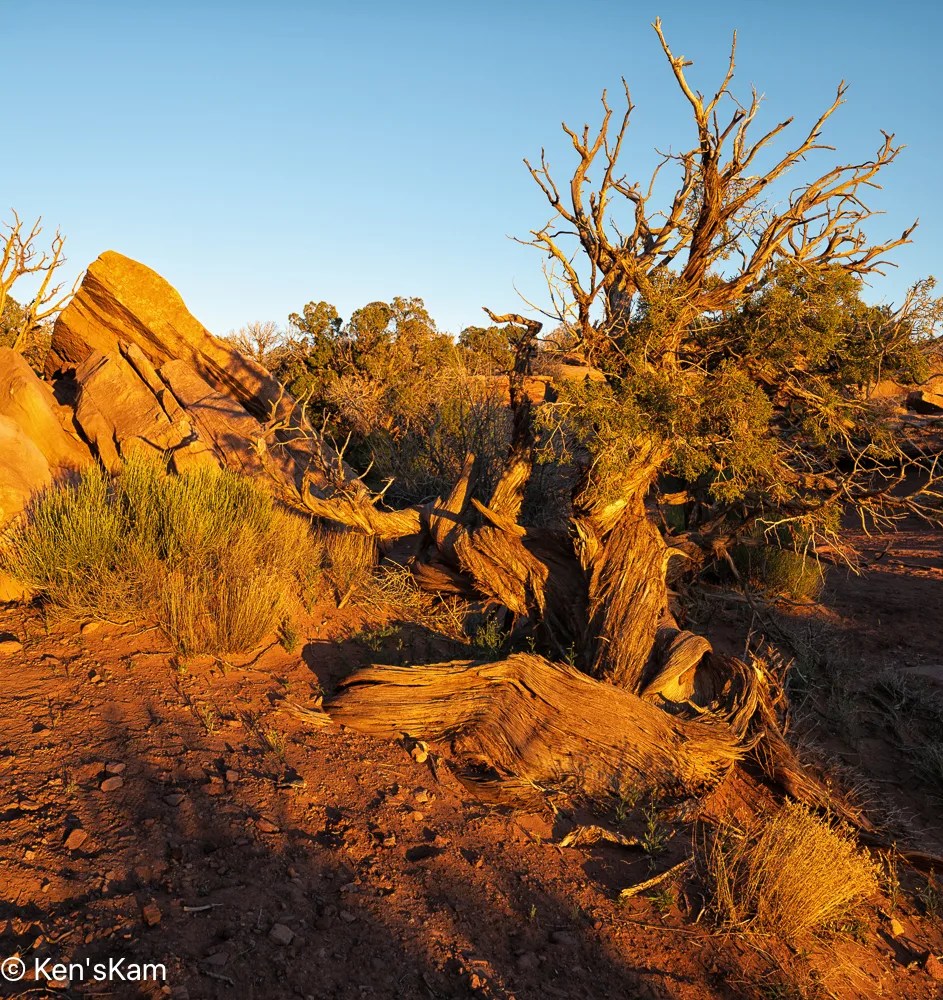
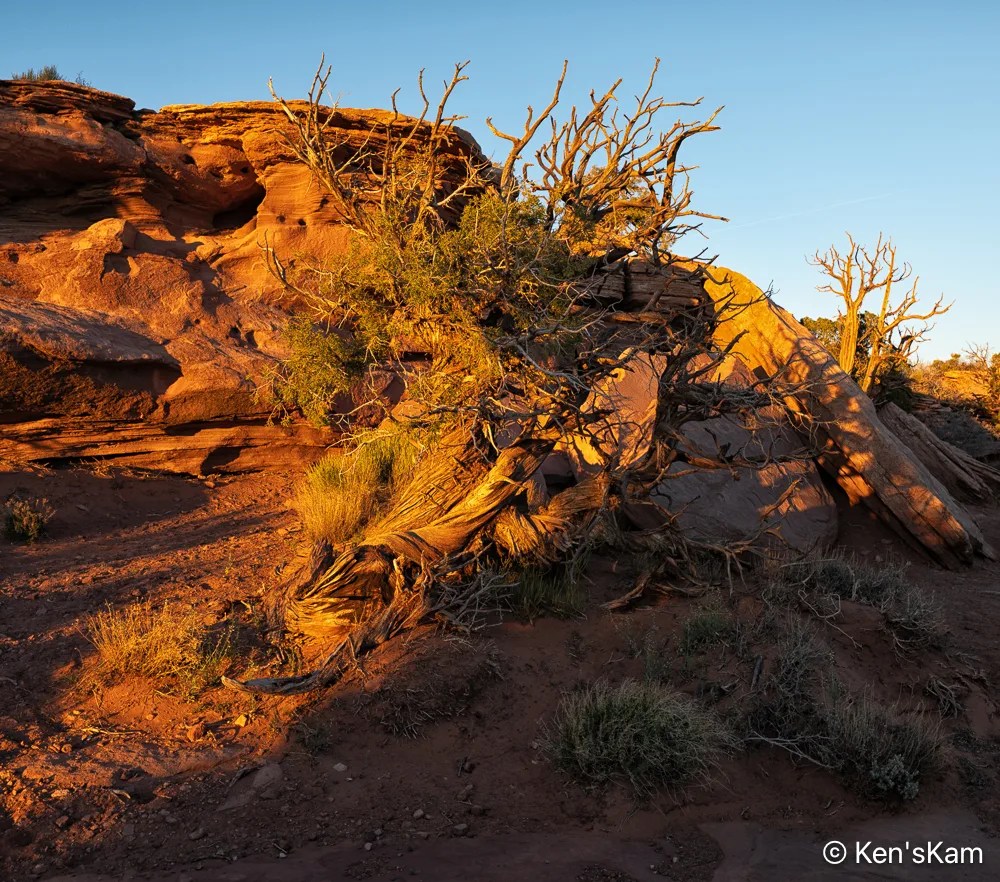
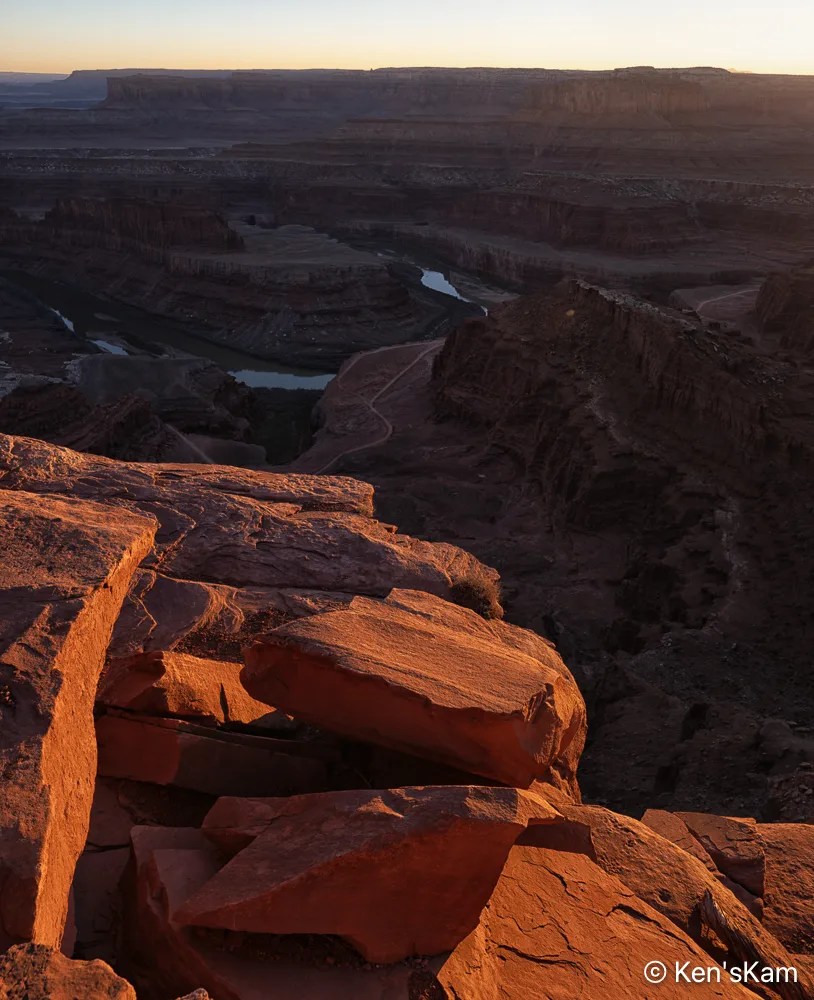
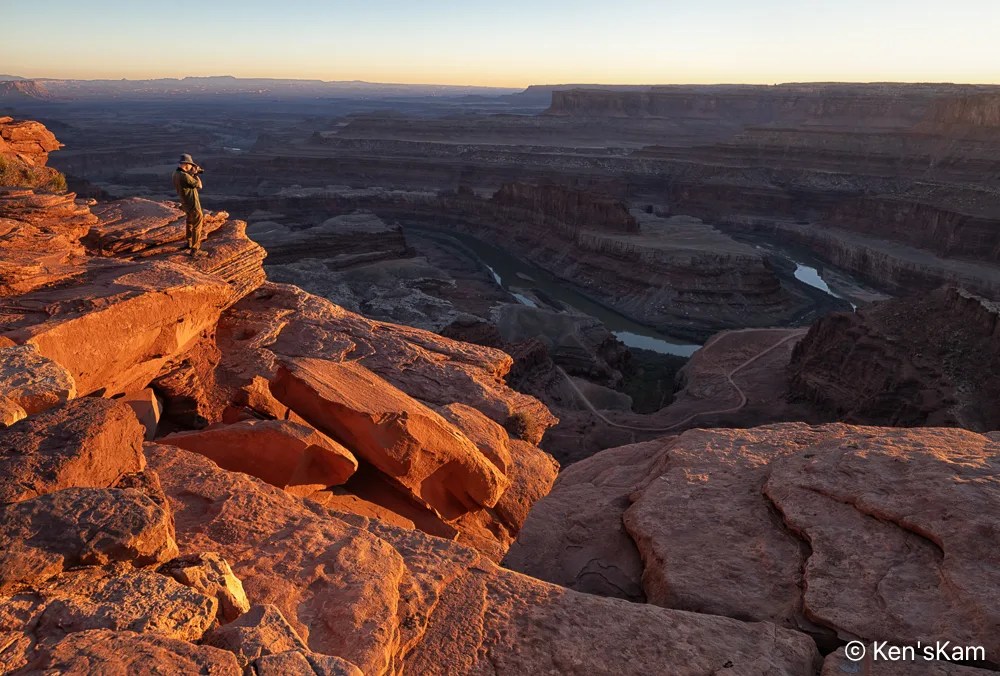
This is a continuation of sunset photography at Dead Horse Point SP, Utah.
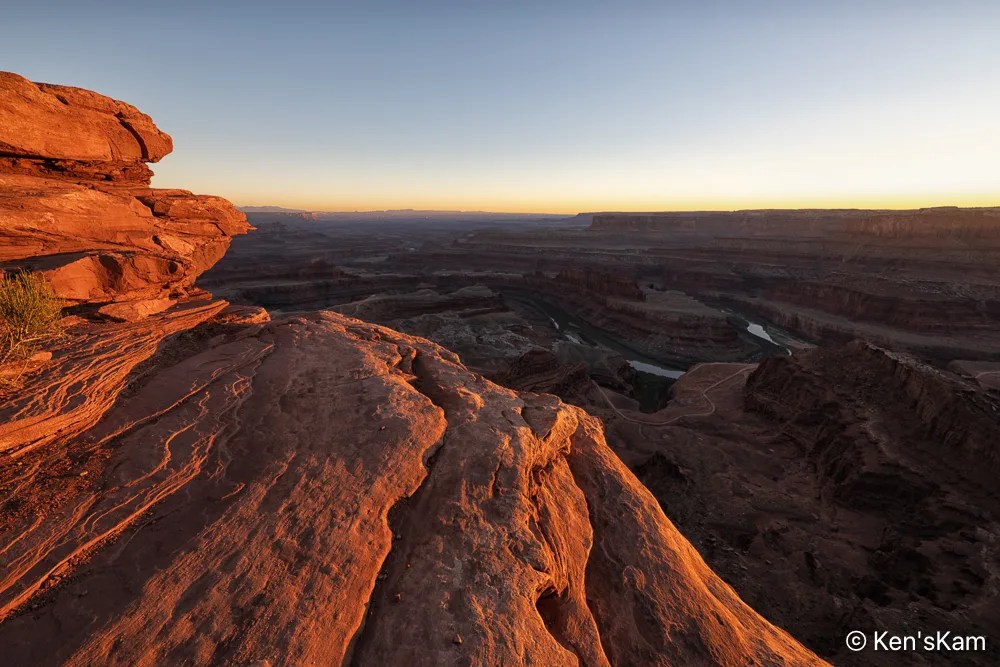
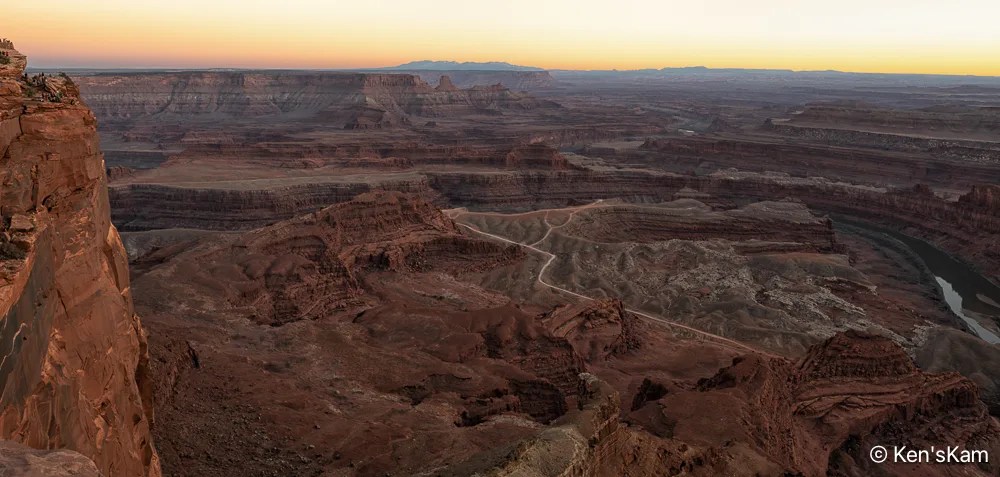
This concludes the photography series from Utah in March of 2026.
Thanks for following,
Ken
This is a continuation of sunset photography at Dead Horse Point SP, Utah.
This concludes the photography series from Utah in March of 2026.
Thanks for following,
Ken
After driving Potash Road and the Shafer Trail, we returned to Dead Horse Point for sunset photography. It was a heavily overcast evening, so prospects for a golden sunset hour did not look promising.
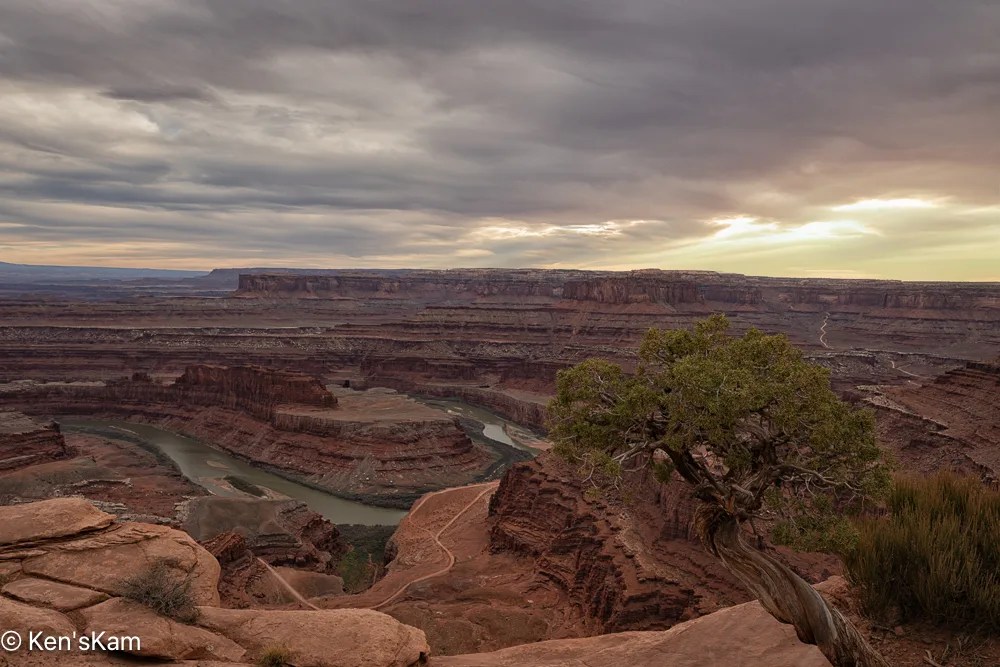
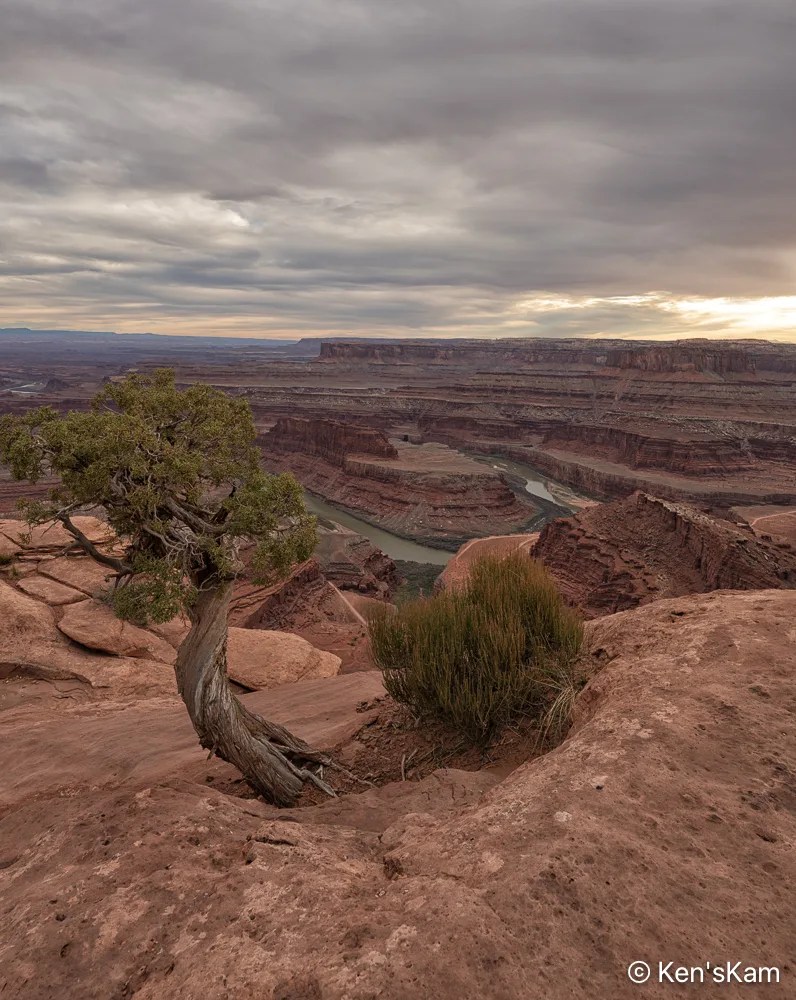
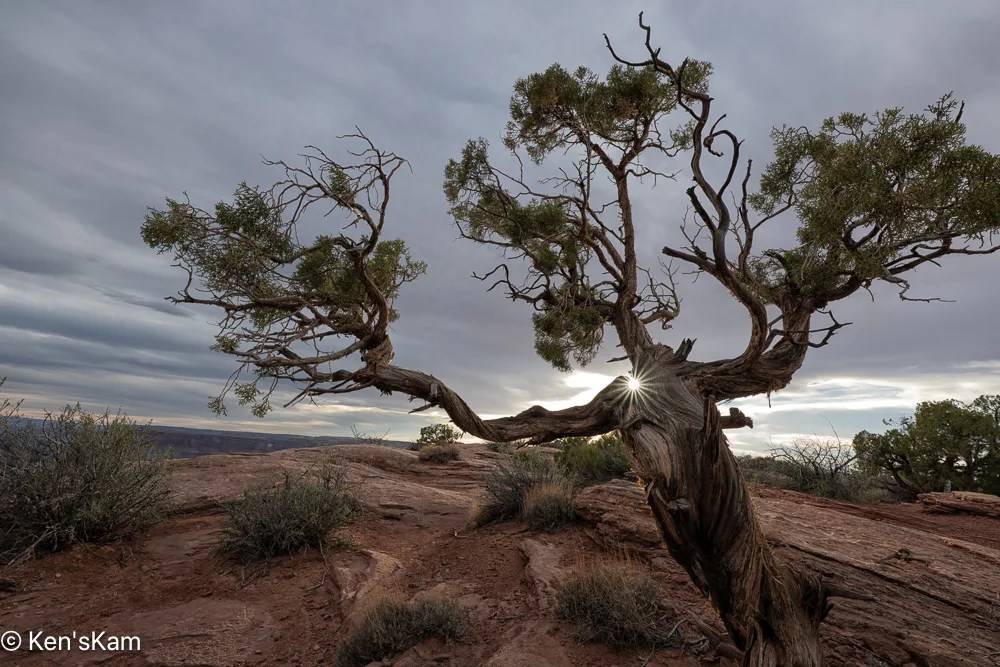
This tree creature seems to be relishing the sunshine on its shoulder.
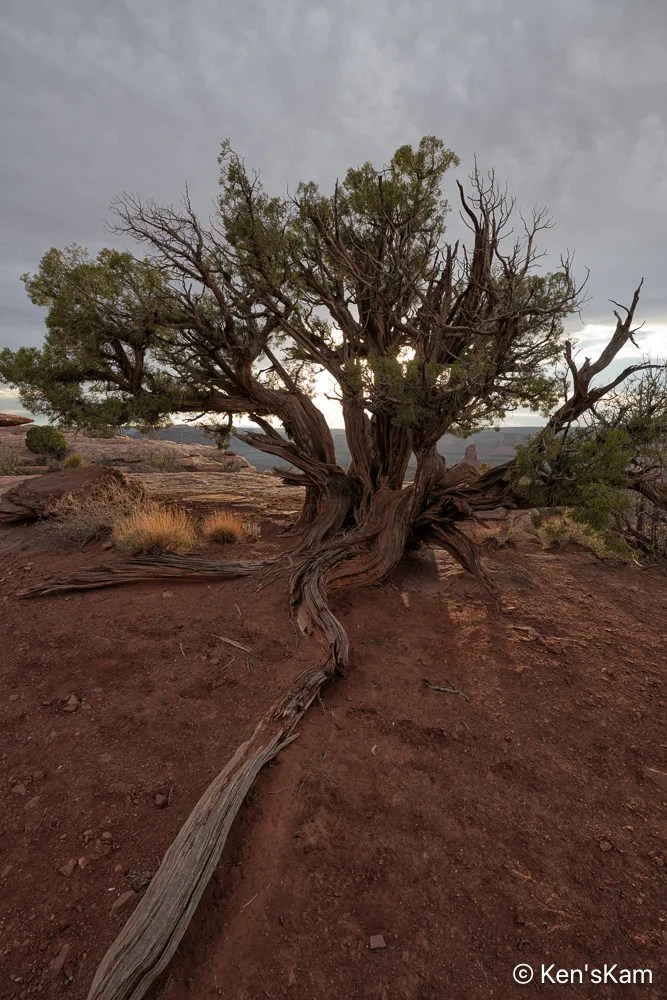
Twisting through the desert dust, a strong anchor holding its life form firmly to the earth.
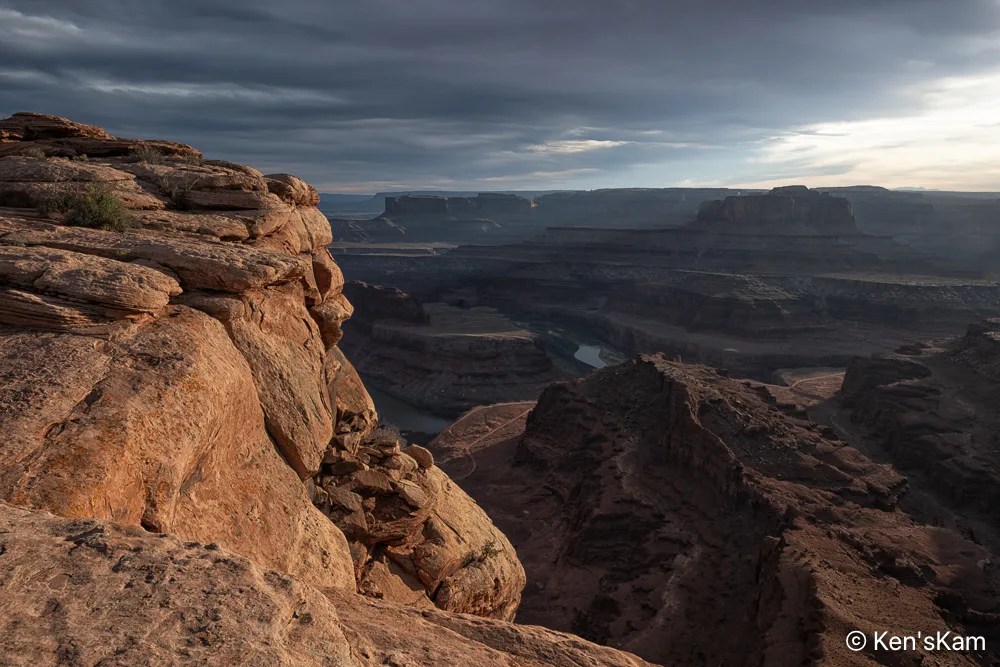
A portion of a nearby coppery cliff edge glows in late day sunlight, thick desert clouds envelope the landscape below in deep shadow.
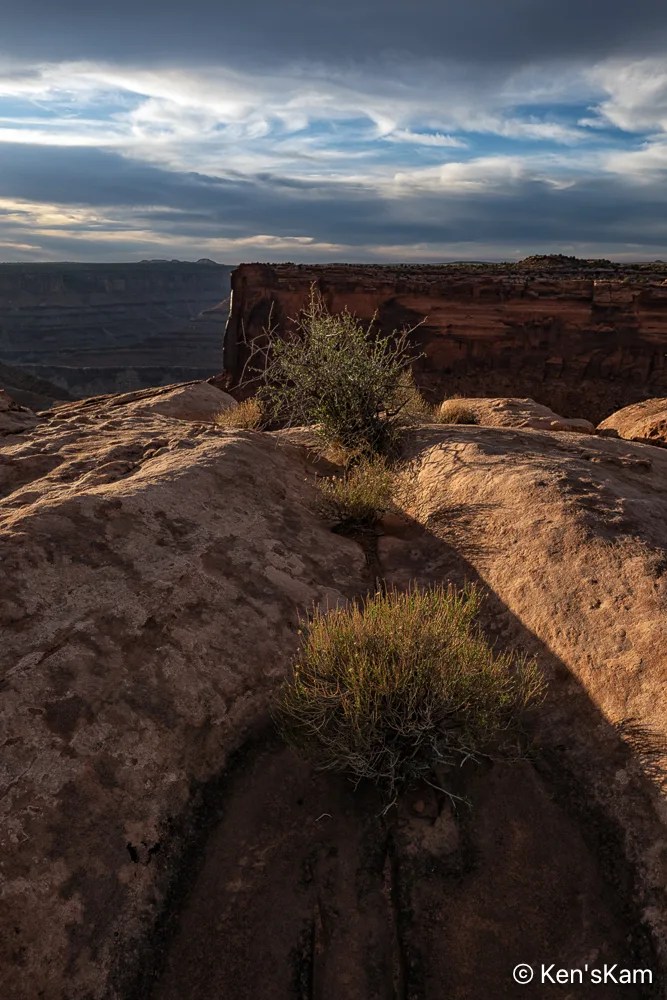
Desert plants sink their roots into the thin soil and hard rock, where scant moisture hides from the harsh sun. The V shape of the niche in the rock is reminiscent of similar shapes seen in Georgia O’Keefe’s artwork.
Thanks for following,
Ken
I’ve fallen behind in my normal blog post schedule, being preoccupied with other summer time activities. I’ll try to get back to a more regular schedule.

I used this geological feature as a foreground for star photography. As usual, I’m slow at processing those night images, so the star photos will have to be in a later post.


Most of the golden hour light was gone by the time I made ‘Early Morning Light’, but I really like the light and shadows on the undulating foreground.
After shooting sunrise from our campsite, we explored more of the local area, driving a number of side roads into the desert.

These rock shapes remind me of crowns that might be worn by kings and queens.


‘Sand, Plants, and Hills’ is a paraphrase from the Eagles’ song ‘A Horse with No Name’.

As evening approached, we set up for more night sky photography.
Thanks for following,
Ken
We retrieved our cameras, after leaving them out at night, programmed to shoot the night sky, in the early morning and proceeded to shoot sunrise photos at Utah’s Little Grand Canyon.

It was a cloudless morning, so the sky was bland and the sunrise was not at a good angle to illuminate much of the geological features in and around the canyon. This limited the possible compositions. Perhaps another time of the year might work better for sunrise at this location.


After a brief and limited golden hour sunrise shoot along the canyon, we drove back to The Wedge and shot a few images there. The smoke from a distant wildfire lingers in the canyon, giving this image a “misty/foggy” appearance.


It was the long, curvy root of this tiny tree on the edge of the canyon that motivated me to compose this image.


These two Smoky Morning images were shot from the same spot, I just zoomed in a little more and shifted the camera more to my right, eliminating most of the glare from the sun, emphasizing the big round rock in the middle, creating leading line features with the sunlit rocks on the bottom right diagonal and keeping the smoky effect in the canyon.
This concludes my photography (except for the yet to be edited night time photographs) at Utah’s Little Grand Canyon. Now it is time to move on and find another location.
So stay tuned to see what we found,
Ken
In reviewing a map of the area near our base camp, we discovered a place referred to as Utah’s “Little Grand Canyon”, along the San Rafael River. So we set out to check out that site. Along the way we found other interesting places and sites. This post and following ones will showcase our finds.
The drive to the “Little Grand Canyon” was along maintained gravel backroads, although most of the roadways were washboarded, rocky and rough, but scenic for long stretches with exposed geological features.
There are a couple of easily accessible Native American artwork panels on rock faces along this drive. One requires walking up a slight incline to reach, but the most impressive one, Buckhorn Wash Petroglyph Panel, has a large parking lot and is literally right at the edge of the parking lot.

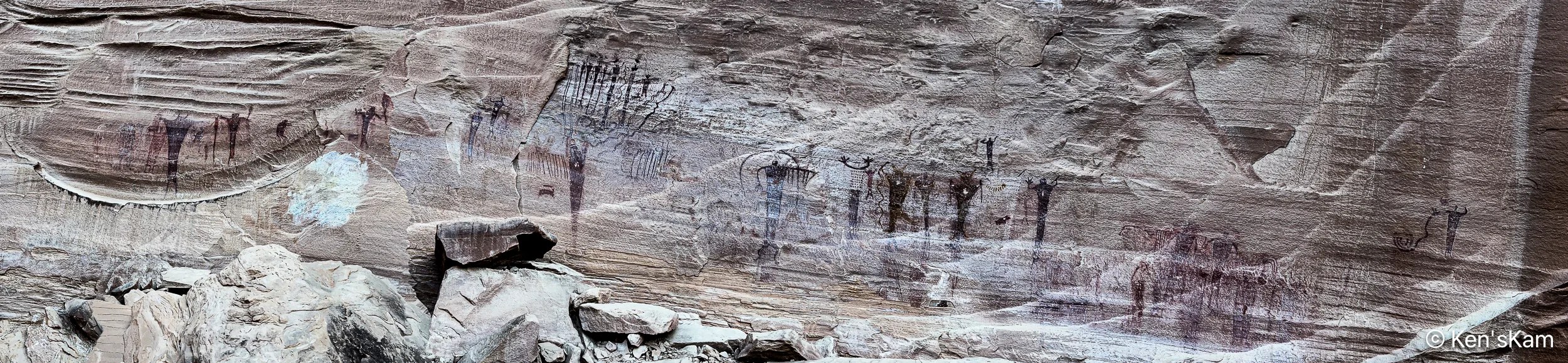
The Buckhorn Wash Petroglyph panel is long. Much longer than this panorama might indicate. I made this panorama with my iPhone by walking fast from one end of the panel to the other, trying not to trip and fall on the rocky, uneven surface. I was inspired to do this, after watching my son do it. Otherwise, I might never have thought to do a pano in this manner.
The following images are shots of small portions of the panel, showing details of some of the pictographs.


There are a number of signs placed in front of this panel with information and questions about what these images mean and how newer cultures came along and modified the older pictographs. And, yes, even modern day vandalism. In fact much damage to this panel was partially repaired in 1995.

Please refrain from defacing such ancient records. These are already fading away due to natural weathering. Don’t accelerate the loss.
Ken
It is spring (or almost) and time for another spring trip with my oldest son. Traveling in the U.S. for outdoor activities in the spring, one always has to consider the weather at potential destinations.
The initial plan this year was to fly into Portland, Oregon, drive to Cannon Beach for photography along the Oregon coastline, knowing that the typical rainy weather along the coast might result in last minute changes, and it did. The forecast for the time interval available for this trip was for cool, rainy, overcast weather every day, which can offer some opportunities for photography, but might not be so pleasant every day. So cancel plan A. Move to Plan B.
Plan B was to go to the same area as last year, where there were still some possibilities to see and photograph in some locales not visited during previous trips. Then a few days before executing Plan B, Plan C came up. Plan C was to explore an area of Utah seen superficially and partially, when passing through on the way to other destinations. Plan C was executed.
I drove two long days to reach the first destination, a first come first serve, free camping area on BLM (Bureau of Land Management) public land not far off of I70 west of Green River, Utah. This area is said to be popular with off roaders and I wanted to be sure to get here to find a campsite before the weekend crowd arrived. As it turned out, while there were a few scattered campers, including those hauling their offroad vehicles, there was no large crowd and I easily found a suitable campsite, somewhat secluded from others.


I shot the sunset panorama standing on the roof rack of my vehicle. If one looks closely, the tops of a few other campers can be seen in this image.
My son met me here to begin our exploration, making this our initial home base. Before he arrived, I had some time to walk around this area, shooting desert scenes with my iPhone. So stay tuned for part 2 to see some of those images.
Thanks for following,
Ken
This is the final installment of photography in the area of Southern Utah known as ‘White Rocks’.


‘Rocky Slope’ give an indication of the environment one must navigate to photograph in this area.

‘Leaving White Rocks 1’ was chosen for Flickr’s Explore page.

And that’s a wrap,
Ken
This is a continuation of multiple shoots in an area of Southern Utah known as ‘White Rocks’.

This first image on the Flickr Explore page.


To be continued,
Ken
We returned to the area refered to as White Rocks in Southern Utah for an early morning shoot. I switched from the Nikon D850 and 24-70mm lens to the Nikon Z8 and Nikon Z14-24mm for this shoot.


To be continued,
Ken
More photography in an area known as White Rocks in Southern Utah.

This group of hoodoos seem to be looking about for the fallen head of the headless stump in the background.

There are many of these “Flat Top” hoodoos in this area and many headless ones as those flat tops eventually fall off.

The square shape of the head on this hoodoo looks as if it could have been purposely shaped. Getting this image with that georgeous sky behind it was a bonus.

Maybe those rocks in the foreground are from previous hoodoos here?

The creases and lines in these rocks remind me of baked rolls.

As the various layers of rock erode and collapse from a wall here, interesting textural features are created with lines, shapes and fractures.

The sunlight disappears well before sunset over most of this erroded valley, limiting the opportunity for golden hour light.

Shooting from “behind” these hoodoos, looking down and over the valley of their dominion, seeing that valuey as they see it.


Thanks for following and stay tuned for more White Rocks photography,
Ken