
This is a continuation of 2025 fall photography in Indiana.


Thanks for following, (and, yes, there will be more fall photos),
Ken
This is a continuation of 2025 fall photography in Indiana.
Thanks for following, (and, yes, there will be more fall photos),
Ken
More 2025 fall photos from Indiana.


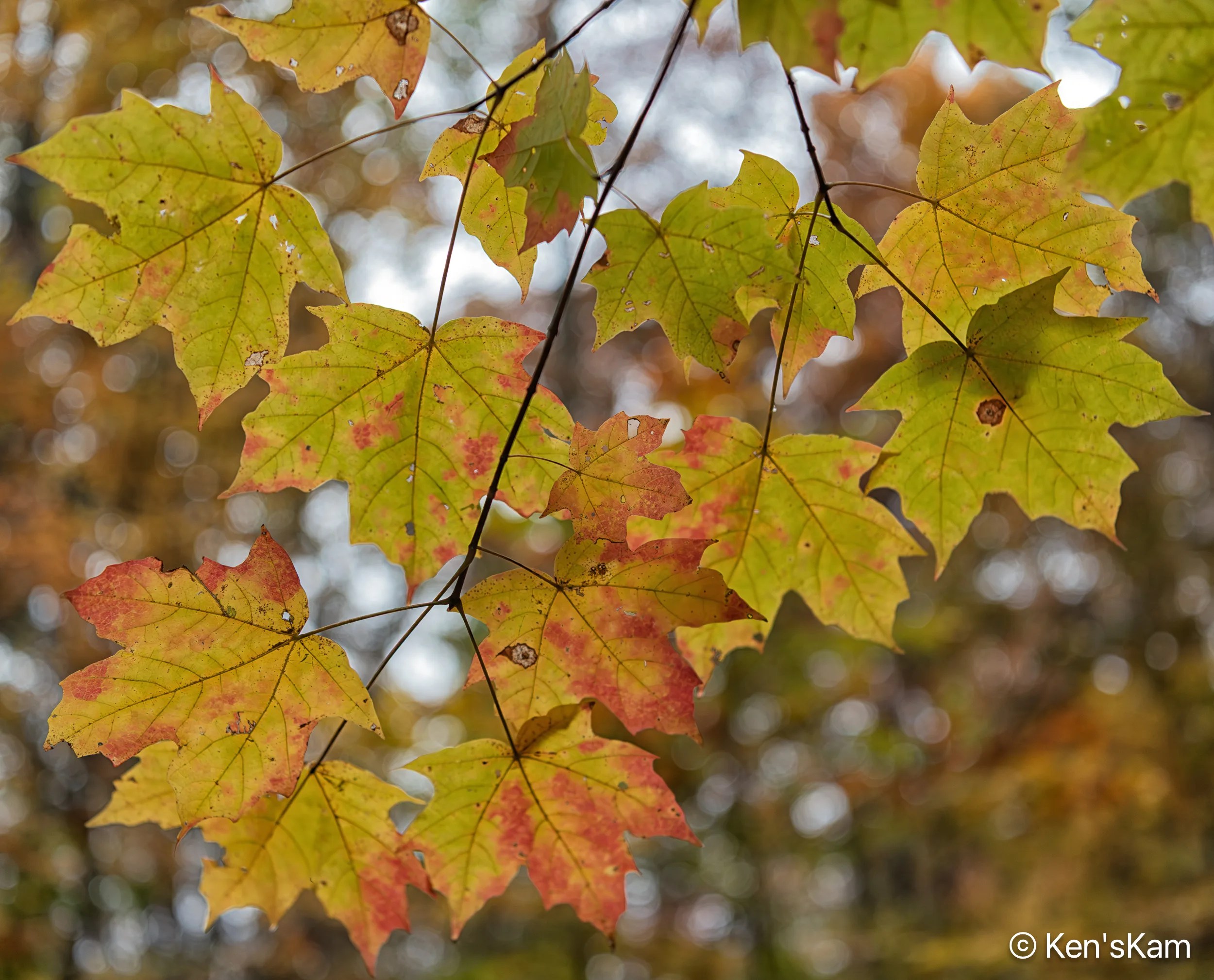


More 2025 Indiana Fall photos to come,
Ken
This is the final part of ‘Creek Leaves’.


This concludes this series on fall leaves in an Indiana creek. I expect readers are breathing a sigh of relief, but trust me the photos presented in this series is a subset of many more and since there are infinitely many ways to photograph this subject matter, it would be possible to continue such a theme forever. [And maybe I will do more in the future].
Thanks for following,
Ken
And even more photos of fall leaves in an Indiana creek, fall 2025.


Be patient, there is only one more post in this series ‘Creek Leaves’,
Ken
Photography of fall leaves in an Indiana creek, fall 2025.


Believe it or not, I have more Creek Leaves photos to share,
Ken
Photos of fall leaves in an Indiana creek, fall 2025.


Note: Numbered photos are those images which are also posted to my Flickr page.
Happy New Year and stay tuned for more Creek Leaves photos,
Ken
More fall photos from Indiana in the fall of 2025.

A light breeze rippled the creek surface, giving this image an impressionist painterly appearance.

Fallen leaves, mostly submerged, in an Indiana creek with reflections of the trees around the creek.


I considered titling this ICM image of a fall leaf ‘Maple Leaf Comet’.

At first it was just a pretty leaf lying on a mossy rock that got my attention, but the more I looked at it the more it looked like an elegant female model posing like a naturalist in an outdoor environment. (Maybe I had been wandering alone in that creek bed too long).

Nature makes its own artistic arrangements, no need for human intervention.

Looking for ideas for a title, I found that fallen leaves are refered to as “leaf litter” or “tree litter”. Is it really appropriate to describe such natural beauty as “litter”? Can’t we show some respect for these fallen, natural beauties?

I set out one morning with a National Forest hiking path as a destination. When I arrived, there was a crew working at the limited area parking access. The young ranger in charge said they were just wrapping up setting posts for a kiosk and would be out of my way in a few minutes. So I drove on down the road to kill a few minutes, took a side road, stopped beside a creek and went down into the creek bed to look around. There was not much water in the creek, just a narrow stream with a few shallow puddles. There were many fallen leaves in the creek, which looked like good photographic subjects, so I returned to my vehicle, retrieved my camera and spent some time photographing those leaves.

Next up, More Creek Leaves,
Ken
This is a continuation of fall photography in Indiana in the fall of 2025.

‘Forest Creature’ was chosen for Flickr’s Explore page, but I like ‘Poised to Strike’ better.


The photos above were all made, while hiking through an Indiana fall forest.
These below were all made in an Indiana creek that crosses an Indiana backroad.

Ok, I’ll admit to placing those leaves around the tire sidewall. Firstly, it is a shame that folks discard such items in manners that are detrimental to our environment. Secondly, other than photo documenting this litter, it might as well be dress up a little.

‘Leaf, Rock, Camera’ is an obvious allusion to the game “Rock, Paper, Scissors”.


Stay tuned for more Indiana fall photos,
Ken
More 2025 fall images from Indiana.


Stay tuned for more Indiana fall images,
Ken
Another year and another fall in Indiana. This year was much different than the previous few. Drought and a warm fall resulted in sporadic color change in the local trees and forests.
It was just after mid-October, when we arrived in Indiana, a time when the local forest fall foliage would normally be highly apparent. This year many trees were still fully green, a few had already changed almost completely and other were just exhibiting the seasonal change in color.
The “peak”, if it can be called that this year, came the first week in November and it was muted, compared to a “normal” year. I’m afraid this will become the “normal” in the future as climate change, which is not a “hoax”, continues its rapid advance.


For these ICM (Intentional Camera Movement) abstract images in a forest, one can include the sky or exclude it. I find that I prefer those images with the sky limited or excluded, which usually requires cropping the image in post processing.

The direction of the light is also a factor in these image. Side light produces alternating light and dark patterns across the image, which I tend to prefer.
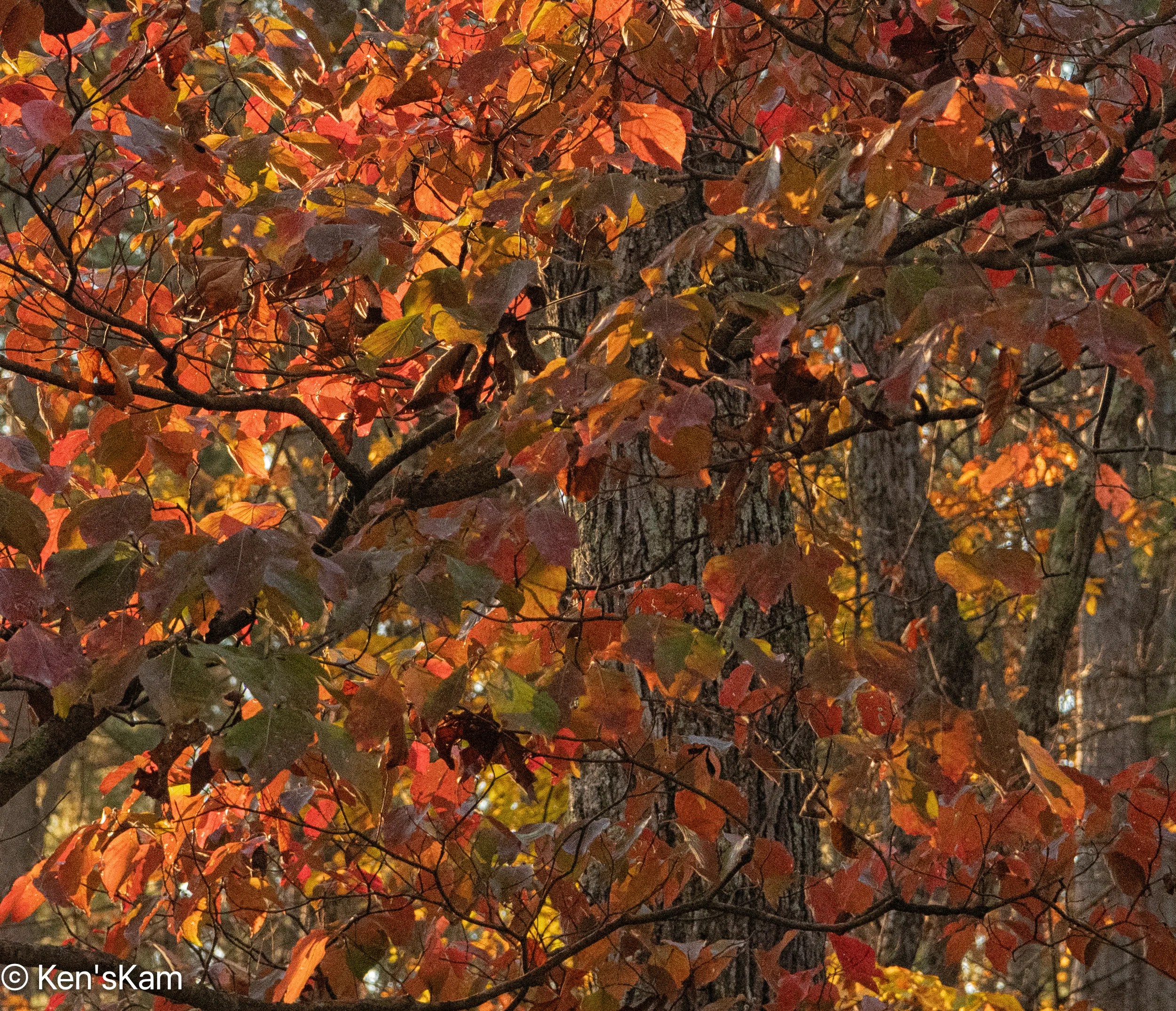


Stay tuned for more fall impressions,
Ken